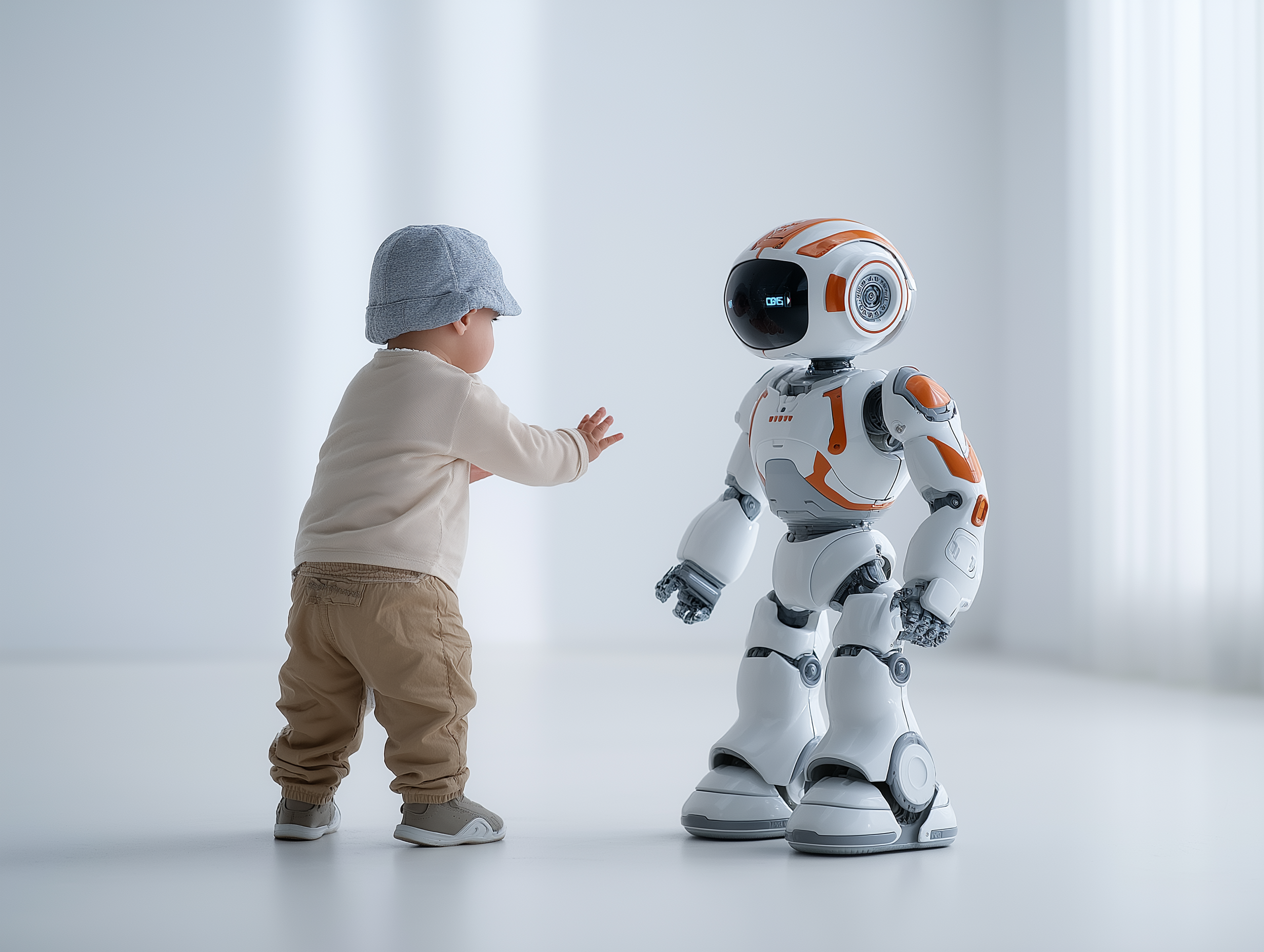
Modern robotics systems are becoming increasingly advanced in areas that once seemed almost impossible for machines. Autonomous robots can navigate warehouses, deliver packages, assist in hospitals, recognize objects, and operate inside highly dynamic industrial environments. Computer vision systems have improved dramatically over the last decade, while AI-driven navigation models are capable of processing enormous amounts of environmental data in real time. From a technical perspective, robotics has entered a stage where many systems already function reliably under controlled conditions.
However, one persistent problem continues to expose the limitations of modern robotics: human behavior itself.
More specifically, robotics systems often struggle in environments where people behave unpredictably, inconsistently, or irrationally. This issue becomes especially visible when robots leave structured industrial spaces and enter ordinary human environments such as airports, shopping centers, hospitals, restaurants, offices, or crowded public areas. The challenge is not that robots fail to understand rules. The challenge is that humans frequently ignore them.
For most robotics systems, prediction is essential. Autonomous navigation depends heavily on estimating what surrounding objects and people are likely to do next. AI models analyze movement patterns, calculate trajectories, and generate decisions based on probability. In stable environments, these systems perform extremely well because the world behaves in relatively predictable ways. Warehouse robots move efficiently because shelves remain fixed, pathways stay organized, and workers usually follow established routines. The environment itself supports robotic logic.
Human environments function very differently. People stop suddenly without warning, change direction impulsively, hesitate in crowded spaces, walk while distracted by phones, gather in irregular groups, or move unpredictably around obstacles. Children behave differently from adults, elderly individuals move at different speeds, and stressed or tired people often react irrationally to surrounding movement. In many public environments, humans constantly violate the behavioral patterns robotics systems expect to see.
For humans, these situations feel natural and manageable. Human beings are remarkably skilled at interpreting subtle social and environmental signals almost subconsciously. People can often predict another person’s movement simply by observing posture, eye direction, hesitation, or emotional tension. Robots, however, process the environment differently. Most systems rely on mathematical models rather than intuitive social understanding.
This creates a major weakness in real-world robotics.
Why Prediction Models Break Down
Modern robotics systems are trained on data. AI models learn from repeated scenarios, simulation environments, and structured examples of movement behavior. During training, systems gradually recognize patterns that allow them to predict what nearby agents are likely to do next. The more consistent the environment, the more reliable those predictions become.
The problem is that human behavior is often inconsistent even under identical conditions.
A pedestrian may suddenly stop in the middle of a corridor after noticing a message on their phone. A customer in a supermarket may step backward unexpectedly while examining a shelf. A traveler in an airport may abandon an established walking path because they suddenly recognize a boarding gate. Groups of people frequently split, merge, or change direction with little warning. From the perspective of an autonomous robot, these actions generate massive uncertainty.
This uncertainty affects navigation quality immediately. Robots become slower, more hesitant, and more conservative in crowded environments because the system struggles to estimate safe movement paths. In some cases, robotics systems begin overreacting to unpredictability itself. Machines stop too often, reroute inefficiently, or fail to move smoothly through spaces with chaotic human activity.
Interestingly, the issue becomes worse in environments that appear visually normal to humans. Public spaces contain countless forms of subtle complexity that robotics systems still find difficult to process:
- reflective surfaces;
- partially blocked pathways;
- overlapping human movement;
- irregular lighting;
- visual distractions;
- temporary obstacles;
- ambiguous social interactions.
Humans adapt to these conditions instinctively. Robots often do not.
The Problem With Simulation Environments
One reason for this limitation is the growing dependence on simulation-based robotics training. Simulation environments are extremely useful because they allow robots to practice millions of scenarios safely and efficiently before entering physical spaces. Engineers can train systems faster, reduce costs, and expose AI models to controlled variations of movement and object interaction.
Yet simulations still simplify human behavior too aggressively.
Virtual humans inside simulations usually behave according to clean mathematical logic. Their movement paths remain relatively structured, reaction times are stable, and environmental variables are easier to predict. Real human environments contain far more randomness, hesitation, emotional behavior, and social unpredictability than most training systems currently reproduce.
As a result, robots trained successfully in simulation may struggle unexpectedly in physical environments filled with ordinary human chaos.
This issue is already visible in service robotics. Robots designed for hospitality or healthcare often perform impressively during demonstrations but encounter serious difficulties in crowded real-world conditions. A delivery robot inside a hospital corridor may lose navigation confidence because multiple people suddenly move around emergency situations. A restaurant robot may become trapped because customers reposition chairs or stand unpredictably in narrow spaces. Even autonomous cleaning systems can struggle when public movement patterns become too irregular.
The core issue is not simply mechanical performance. It is behavioral adaptability.
Human Irrationality as a Robotics Challenge
The deeper problem is philosophical as much as technical. Humans do not always behave according to efficiency, consistency, or logic. Emotional decisions, distraction, social behavior, impatience, stress, and spontaneity constantly influence movement patterns. In many situations, people themselves cannot fully explain why they made a particular movement decision.
For robotics systems, this creates a difficult contradiction. AI models are designed to identify patterns, but human behavior regularly breaks those patterns. The more autonomous systems enter public environments, the more frequently they encounter situations where prediction becomes unreliable.
Autonomous vehicles already face similar challenges. Pedestrians cross streets unexpectedly, cyclists ignore traffic norms, and drivers behave inconsistently under stress. Delivery robots experience comparable problems in crowded urban spaces where people move unpredictably around sidewalks and entrances. In each case, the system is not failing because it lacks raw computing power. It struggles because human behavior itself resists stable mathematical modeling.
Some researchers now believe future robotics development will depend less on improving pure technical precision and more on improving uncertainty management. Instead of trying to predict exact human behavior, robotics systems may need to become better at operating safely inside environments where unpredictability is normal rather than exceptional.
This would represent a major shift in robotics philosophy. Earlier generations of AI systems assumed that enough data would eventually make human behavior predictable. Increasingly, engineers are realizing that unpredictability may never disappear completely because it is deeply connected to how humans naturally function.
The Future of Human-Robot Interaction
As robots continue moving into public life, this problem will become more important rather than less important. Future autonomous systems will not operate only inside laboratories or warehouses. They will increasingly share space with ordinary people inside complex social environments filled with distraction, emotional behavior, and constant uncertainty.
The success of future robotics may therefore depend not only on how intelligent machines become, but on how well they tolerate imperfect human behavior. Machines capable of functioning smoothly in chaotic social environments may ultimately prove more valuable than systems optimized only for ideal conditions.
In many ways, the greatest challenge for robotics is no longer teaching robots how to follow rules. It is teaching them how to survive in environments where humans constantly ignore them.
No Responses